

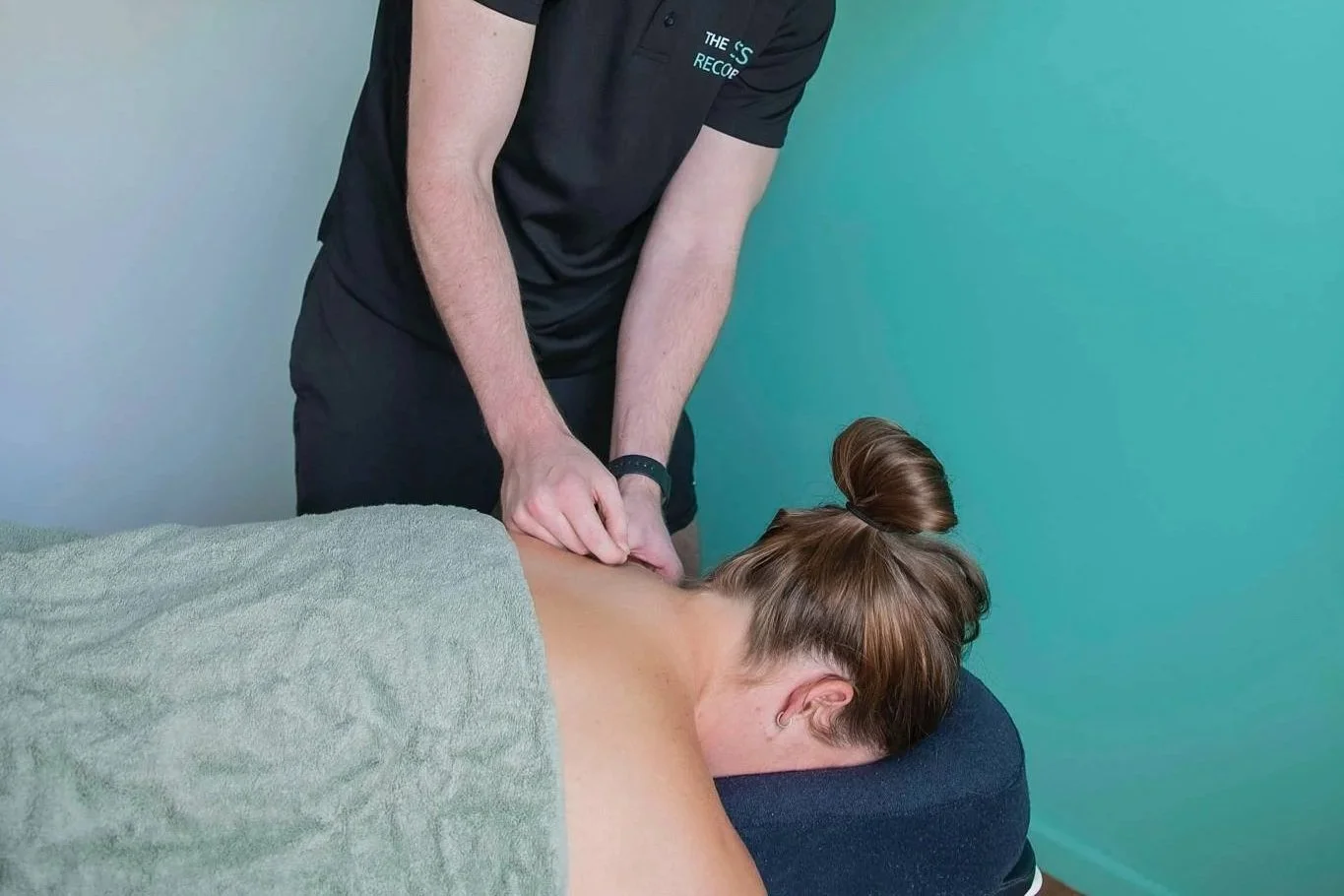
MYOTHERAPY
Recovery, Movement & Active Rehabilitation Support
At The Sports Recovery Hub, Myotherapy is used as part of a broader approach to helping people move well, recover effectively, and stay active.
While Physiotherapy and Chiropractic care often focus on diagnosis, injury management, and rehabilitation planning, Myotherapy can play an important supporting role by helping improve movement, reduce muscular tension, and assist recovery between treatment sessions.
Research suggests manual therapy and exercise-based approaches may help improve short-term pain, mobility, and function when combined with an active rehabilitation program (Bialosky et al., 2009; Coulter et al., 2018).
Whether you're managing the physical demands of work, training for sport, recovering from an injury, or looking to stay ahead of recurring aches and pains, Myotherapy can be an effective part of your overall recovery strategy.
When Would You See a Myotherapist?
Many people choose Myotherapy when movement restrictions, muscular tension, or recovery demands are affecting their ability to train, work, or perform at their best.
Common reasons people book include:
Muscle tightness and stiffness
Sports recovery
Training load management
Mobility restrictions
Persistent muscular tension
Recovery between Physiotherapy or Chiropractic appointments
Exercise rehabilitation support
Returning to training following injury
Myotherapy is often used alongside rehabilitation programs to help improve movement quality, support recovery, and keep people active while progressing towards their goals.
Our Team Approach
One of the strengths of The Sports Recovery Hub is the ability for practitioners to work together when required.
For example:
A Physiotherapist may oversee your rehabilitation program while a Myotherapist assists with movement quality and soft tissue recovery.
A Chiropractor may be helping restore mobility while a Myotherapist addresses muscular tension and movement restrictions.
Athletes may utilise Myotherapy throughout heavy training blocks to assist recovery and maintain performance.
By working collaboratively, our practitioners can help ensure your treatment and rehabilitation remain aligned with your goals.
What Treatment May Include?
Depending on your presentation, treatment may include:
Myotherapy
Soft tissue therapy
Trigger point therapy
Dry needling
Cupping therapy
Mobility exercises
Assisted stretching
Corrective exercises
Recovery advice
Treatment is tailored to your individual goals, activity levels, and recovery needs.
Who Can Benefit?
Myotherapy may be suitable for:
Athletes
Gym-goers
Office workers
Tradespeople
Active adults
Individuals returning from injury
People looking to improve mobility and recovery
Frequently Asked Questions
Can Myotherapy Replace Physiotherapy or Chiropractic Care?
Not always. If you're experiencing a new injury, persistent pain, significant weakness, nerve symptoms, dizziness, headaches, or difficulty performing normal activities, an assessment with a Physiotherapist or Chiropractor may be more appropriate initially.
Myotherapy is often most effective when used alongside a broader rehabilitation or treatment plan.
Can Myotherapy Help Me Return to the Gym After Injury?
Yes. Myotherapy can be a valuable part of the transition between injury rehabilitation and returning to normal training. Treatment may focus on improving mobility, reducing muscular tension, and addressing movement restrictions while working alongside your Physiotherapist or Chiropractor to help you gradually return to strength training.
Can Myotherapy Help Improve Mobility?
Many people seek Myotherapy to improve mobility and movement quality. Restrictions in muscles, joints, and connective tissues can sometimes influence how well you move during training, sport, and everyday activities. Treatment may include soft tissue therapy, dry needling, mobility work, and corrective exercises to help improve movement capacity.
Do You Prescribe Exercises?
Yes. Ryan incorporates rehabilitation exercises, mobility drills, and strength-based strategies where appropriate. The goal is not only to help you feel better during the session, but to provide practical tools that help maintain improvements between appointments.
Can Myotherapy Help With Strength Training Performance?
While Myotherapy is not a replacement for strength training, treatment may help improve movement quality, recovery, and mobility, allowing you to train more effectively. Many athletes and gym-goers use Myotherapy as part of their overall performance and recovery strategy.
Can Myotherapy Help With Running Injuries?
Myotherapy can be used alongside Physiotherapy and rehabilitation programs to assist with recovery from running-related injuries. Treatment may focus on addressing muscular tension, improving mobility, supporting tissue recovery, and helping runners maintain movement quality while progressing through rehabilitation.
Is Myotherapy Only For Pain Relief?
No. Many people book Myotherapy not because they are in pain, but because they want to improve recovery, mobility, movement quality, and training capacity. Treatment can be a valuable part of maintaining physical performance and reducing the impact of heavy training loads.
Can Myotherapy Be Used Alongside Physiotherapy or Chiropractic Care?
Absolutely. At The Sports Recovery Hub, Myotherapy is often integrated into broader rehabilitation plans. Ryan regularly works alongside our Physiotherapists and Chiropractors to help patients progress towards their goals while maintaining mobility, recovery, and training consistency.
Can Myotherapy Help With Recovery Between Competitions or Events?
Many athletes utilise Myotherapy during busy training blocks or competition seasons. Treatment may help manage muscular tightness, improve movement quality, and support recovery between sessions, allowing athletes to continue performing at a high level.
What Makes Ryan's Approach Different?
Ryan combines hands-on treatment with a strong understanding of rehabilitation, strength and conditioning, and exercise-based recovery. Rather than focusing solely on short-term symptom relief, his approach aims to help people move better, recover effectively, and continue progressing towards their training, sporting, and lifestyle goals.
Do I Need To Stop Training While Receiving Treatment?
Not necessarily. In many cases, the goal is to keep you training where appropriate. Ryan works with active individuals to help modify loads, improve recovery, and address contributing factors while allowing them to continue participating in training, sport, or physical activity whenever possible.
Can Myotherapy Help With Recovery?
Many people utilise Myotherapy as part of their recovery strategy to help manage muscle soreness, improve mobility, and support ongoing training or rehabilitation.
Research suggests manual therapy may assist short-term improvements in pain and function when combined with exercise and active rehabilitation (Bialosky et al., 2009).
How Often Should I Have Myotherapy?
This depends on your goals, training demands, and recovery needs. Some people attend regularly during busy training periods, while others utilise Myotherapy as needed throughout the year.
Book a Myotherapy Appointment
Whether you're looking to improve mobility, support recovery, complement your rehabilitation program, or stay active and performing at your best, our Myotherapists can help you move well and recover effectively.
References
Bialosky, J. E., Bishop, M. D., Price, D. D., Robinson, M. E., & George, S. Z. (2009). The mechanisms of manual therapy in the treatment of musculoskeletal pain: A comprehensive model. Manual Therapy, 14(5), 531-538.
Coulter, I. D., Crawford, C., Hurwitz, E. L., Vernon, H., Khorsan, R., Booth, M. S., & Herman, P. M. (2018). Manipulation and mobilization for treating chronic low back pain: A systematic review and meta-analysis. The Spine Journal, 18(5), 866-879.