

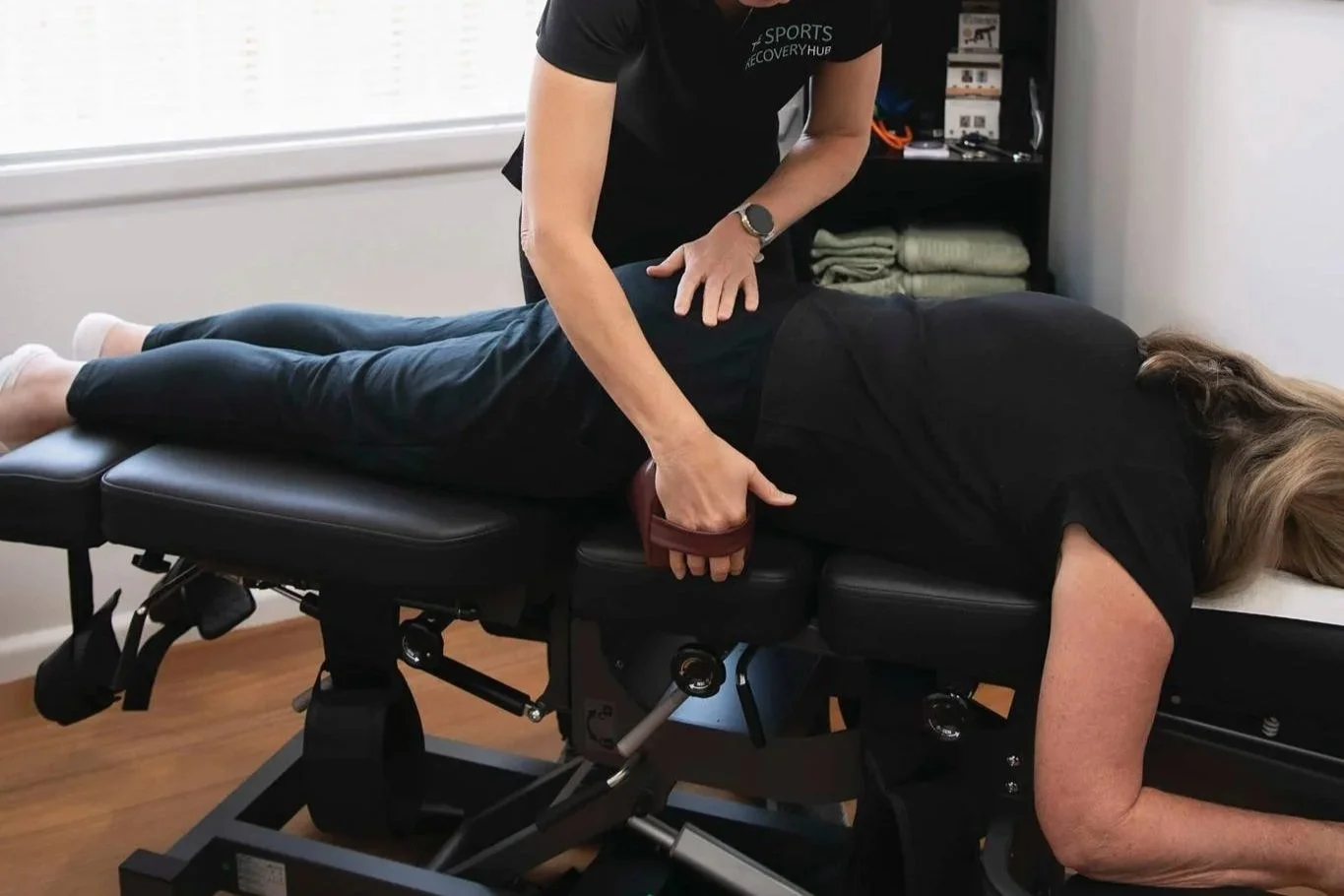
BACK & GLUTES
-
Back pain is one of the most common musculoskeletal conditions and can develop due to a combination of factors including injury, reduced physical conditioning, prolonged sitting, repetitive loading, sporting demands, stress, and lifestyle factors. Treatment focuses on identifying contributing factors, improving movement, restoring strength, and helping you return to normal activities with confidence.
-
Sciatica describes pain, tingling, numbness, or weakness that travels into the buttock and leg due to irritation of the sciatic nerve or its nerve roots. Common causes include lumbar disc injuries, nerve compression, and spinal stenosis. Rehabilitation often focuses on reducing nerve irritation, restoring movement, and improving function.
-
Lumbar disc bulges and disc prolapses can contribute to lower back pain, sciatica, and nerve-related symptoms. While these findings are common on MRI scans, not all disc changes cause pain. Treatment focuses on improving movement, reducing sensitivity, restoring strength, and gradually returning to normal activities.
-
Pain through the gluteal region can originate from muscles, tendons, joints, nerves, or referral from the lower back. Symptoms are often aggravated by sitting, walking, running, or prolonged activity. A thorough assessment helps determine the underlying source of symptoms and guide appropriate rehabilitation.
-
Gluteal tendinopathy is one of the most common causes of pain on the outside of the hip. It occurs when the gluteal tendons become irritated and less tolerant to load. Treatment commonly involves activity modification, progressive strengthening, and improving hip function to restore long-term capacity.
-
The sacroiliac joints connect the pelvis to the spine and play an important role in transferring force through the body. Irritation of these joints may cause pain through the lower back, buttock, or hip region. Management often focuses on improving movement, strength, and load tolerance.
-
Facet joint sprains involve irritation or injury to the small joints located at the back of the spine, often resulting in localised neck or back pain, stiffness, and discomfort with certain movements. These injuries may occur following sudden twisting, repetitive loading, sporting activities, or trauma. Management typically focuses on reducing pain, restoring mobility, improving strength, and gradually returning to normal activities. Research suggests that lumbar facet joints can be a significant source of spinal pain in some individuals, highlighting the importance of accurate assessment and targeted rehabilitation (Manchikanti et al., 2020).